- Client
- Hearthstone Living (demonstration build)
- Industry
- Premium furniture, direct-to-consumer
- Services
- Discovery & requirements, Declarative configuration, Process automation, Reporting & dashboards
- 100% declarative, zero custom code
- Web inquiry to closed sale, fully automated
- Live dashboard on 500+ opportunities
Hearthstone Living is a fictional premium furniture brand. We built this engagement end to end to show how we work: how we gather requirements, design a solution, and deliver a working Salesforce org. Everything below is real configuration in a real org. Only the company is invented.
The goal was a sales pipeline a small team could run from day one, with no developer on call to change it later. So we built the whole thing with configuration. No custom code touches the delivered solution.
The challenge
Hearthstone sells through three doors: the website, walk-in showrooms, and booked design consultations. Each one brings in a different kind of buyer with different information attached. A website visitor leaves a name and an email. A showroom shopper has a location and a salesperson. A design client has a budget and a room in mind.
Most orgs flatten all of that into one lead form and lose the detail. Hearthstone needed each channel captured properly, leads qualified consistently, and deals moved through a pipeline that reflects how furniture actually sells: fast, visual, and personal.
They also wanted the owners to see the whole picture without building a report every time they had a question.
The approach
We started with discovery, mapping each channel and the stages a deal moves through. From there we matched every requirement to a standard Salesforce feature, so the build stays maintainable and upgrade-safe.
The rule we set with ourselves: if a configuration option exists, use it before reaching for code. That keeps the cost down, the risk low, and hands the client a system their admin can actually own.
What we built
Lead capture tuned to each channel. A web-to-lead form feeds the site and tags every inquiry with its source and campaign. Three lead record types (online inquiry, showroom walk-in, and design consultation) each show only the fields that matter to that channel.
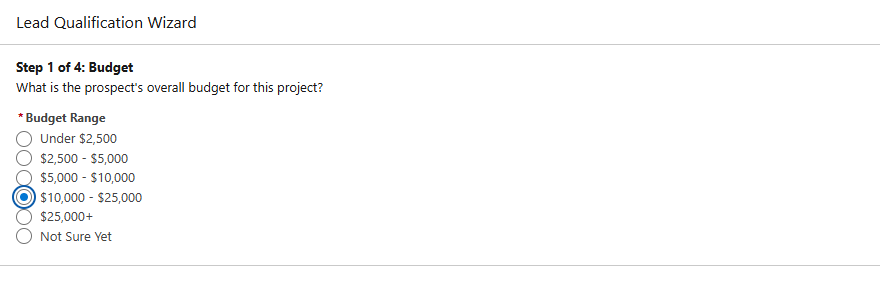
A guided qualification wizard. Reps run a short Screen Flow that asks four questions: budget, room, timeline, and style. It scores the lead and sets its status, so qualification is consistent no matter who does it.
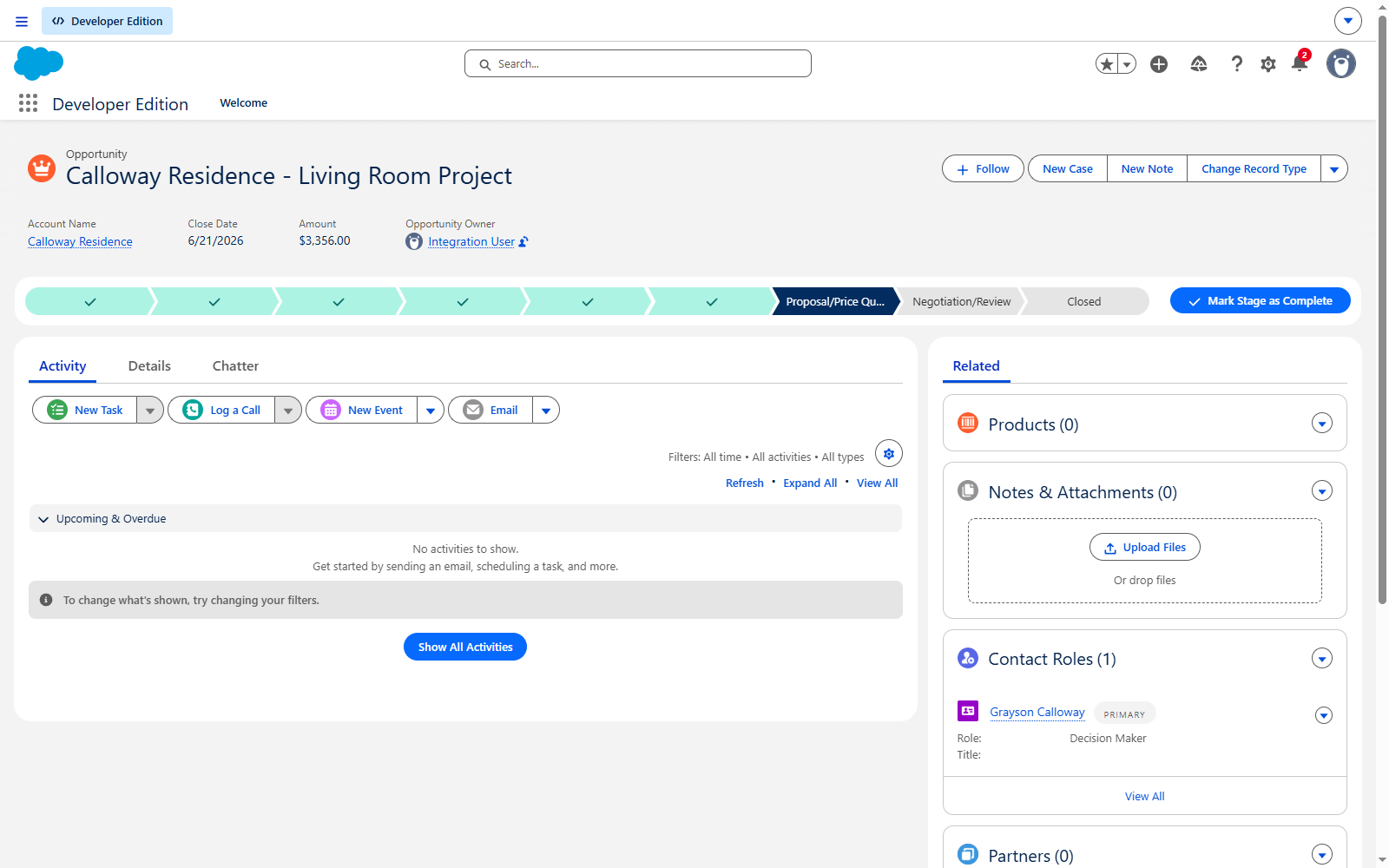
A pipeline that guides the rep. Sales Path lays out every stage with a plain-language tip for what to do next, like attaching the room render before sending a proposal. Dynamic Forms keep the screen clean: the financing section only appears once a deal goes over $5,000.
Guardrails that prevent quiet mistakes. Two validation rules hold the line: a deal cannot pass the proposal stage without a primary contact, and close dates have to stay within a realistic 90-day window.
Automation on the win. When a deal is marked Closed Won, a follow-up task is created for a satisfaction check and a branded confirmation email goes out. The rep does nothing extra.
Clean data at the door. Duplicate rules on leads and contacts catch repeat web submissions before they clutter the org.
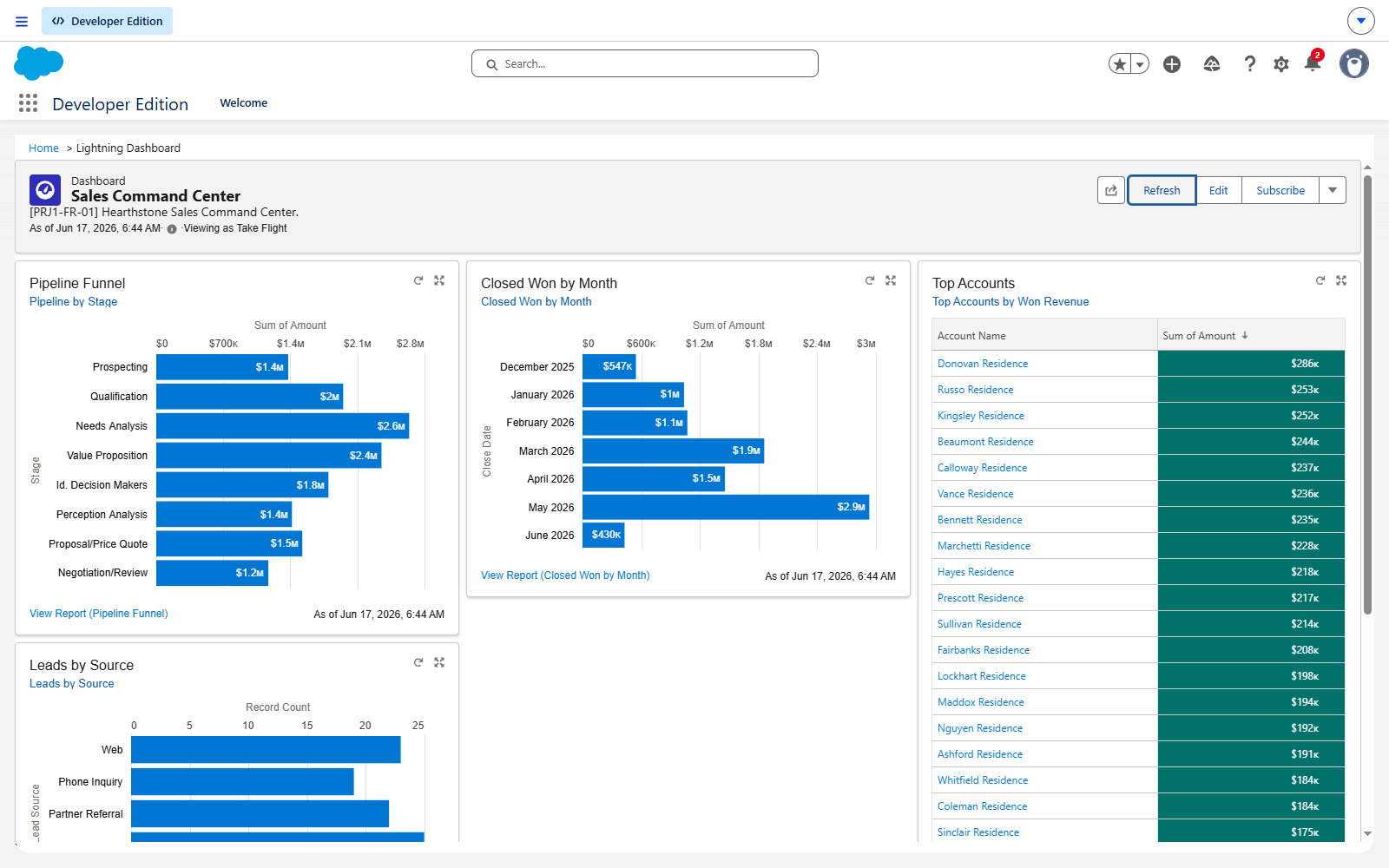
A dashboard the owners actually use. The Sales Command Center shows pipeline by stage, closed won by month, leads by source, and top accounts by revenue, all in one view.
How it runs
A buyer fills out the form on the site. The lead lands in Salesforce tagged with its source, in the right record type, ready for a rep.
The rep runs the qualification wizard, and the lead is scored and routed. Qualified leads convert and move into the pipeline, where Sales Path walks the rep through each stage.
When the deal closes, the automation fires: the customer gets a confirmation, and a satisfaction check is booked for two weeks out. The owners watch all of it on the dashboard in real time.
The result
A pipeline that works the way Hearthstone sells, built without a single line of custom code in the delivered solution. The admin can change a picklist, adjust a stage, or tweak the dashboard without calling a developer.
To prove it under load, we seeded the org with a realistic data set: 150 leads across all three channels, 500 opportunities, and 150 closed sales spread across the team. The dashboard and reports run on real volume, not three sample records.
This is the process we bring to every engagement. If you want a pipeline like this for your business, let’s talk.